
Finding Purpose in Chronic Pain
Discover how to find purpose in chronic pain. Learn to listen to what your pain is telling you and turn your challenges into a source of strength.
Reframing Chronic Pain
Surviving cancer, enduring chemotherapy, and giving away my right lung produced some of the most interesting experiences of my life.
Although the pain was great, I did not break; instead, I chose to live with hope, give goodness for the sake of giving, and make the most of every moment.
I did not allow myself to be swallowed by the cancer, the anguish, or the pain. Instead, I allowed my cancer journey to become the third greatest blessing of my life.
Rise
You can choose to rise and stand as tall as a tree, smile with glee, and pursue all of your favorite dreams. You can choose to live with hope, give goodness for the sake of giving, and make the most of every moment.
You can transform your challenges into blessings, search for the significance of every struggle, and be the brightest lighthouse at the edge of the sea.
How to Find Purpose When You Have Chronic Pain
Finding purpose in chronic pain is no easy task, but it is possible and worth the challenge. In my coaching program Discover Safety Within, I guide my clients to have hope, to give purpose to their pain, to see every challenge as an opportunity to help someone else, to understand that pain is how your brain protects you, and to admire every detail life provides.
You Can Rise with Strength, Purpose, and Passion
No matter where you are on your path, you can rise from the ashes of anguish and do more than simply survive and cope. You can thrive with hope.
You can transform your woe into gold, develop a healthy relationship with your mind and body, and learn to manage your pain. There are good days on the way, the kind that are bright and delightful, and inspire you to smile all night.
Rise, reclaim your life, and rediscover how it feels to live with hope by scheduling a pain management coaching session today.
Have Hope
When the pain is so great that it strips away the significance of every second, it is challenging to have hope. How can you have the faith that everything is going to be okay when it all seems meaningless, and every moment is nothing more than misery?
When we have hope, we can stand against the tide of time, no matter how powerful the world’s waves may be. We can stand tall and strong because hope is love in action, and faith in practice. When we have hope, it summons the perseverance to cope; to fight against our strife, and always rise to our feet. Hope is a delight to have in our lives because it encourages us to see: the power of suffering with glee.
Existing in what seems like a sustained state of suffering can be dizzying, but hope is how we stop the spin. There is no medicine in the world more powerful than that force.
Those who live with hope know it is more than just surviving. It is knowing you can live your life, make the most of every moment, and celebrate every second with the people you love and cherish, no matter how troubling the journey may be.
“When we give purpose to the pain, the suffering ends.”
Suffering ends when you give purpose to the pain, because it replaces the meaninglessness with significance. It gives you a path to follow, a journey to take, and the ability to influence something important to you.
“Every challenge we face is an opportunity to learn how to help someone else.”
It is easy to find ways for our woe to serve ourselves. In most moments, we place our wants and needs first because we are programmed for survival.
When you offer your wisdom, experience, and insight to others, it gives your suffering purpose by showing you, in real time, how your hurt can help someone else.
If you want to find ways to heal your deepest wounds, search for ways you can be in the service of others.
“Pain is how your brain tries to protect you.”
Your brain loves you and wants to keep you safe from harm. Unfortunately, the only way it knows how to protect you when it is afraid is by using pain.
For years, I used to get angry at my brain and body for creating so much pain. I would grumble and groan, wondering why my life was rife with so much strife. Couldn’t my brain just give me a reprieve so I could experience a modicum of peace?
Instead of fighting against your brain and getting angry at the pain, take a breath and breathe. Offer it compassion and kindness, give yourself a hug, and witness abundant love. Take the time to learn the language of your body and mind, listen, and discover your most peaceful life.
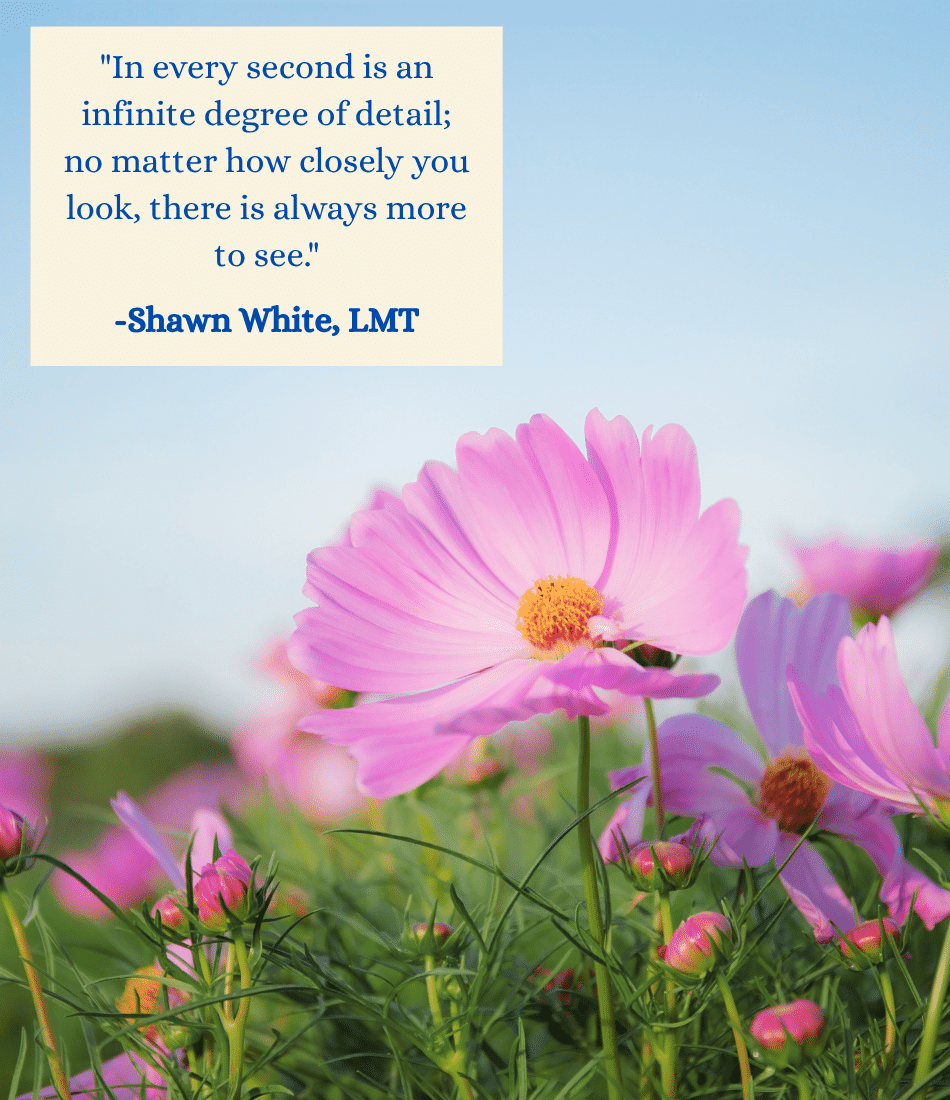
“In every second is an infinite degree of detail; no matter how closely you look, there is always more to see.”
During chemotherapy, I learned that in every second is a snapshot of infinite beauty and awe. You aren’t limited by the thick brush stroke of paint you immediately see.
When you feel something, there is more to that sensation than you initially perceive. If you can look beyond the initial sensation, you can witness its meaning.
Just like with paint, you can look more closely to observe the brushstrokes, uneven layers, drips, and how the sun and shade changed its color.
You do this by using words that refine what you see, removing catastrophizing terms, and asking “What is this really?”

Looking Past the Pain
One day I was sitting at my favorite coffee house sipping on a delicious cup of coffee. I was surrounded by fun acquaintances and silly banter. It was a peaceful scene, one that was delightfully serene, but inside me was an unrelenting storm of anguish and pain.
The agony was so great I could feel my insides quiver, and my body shake. I could feel a roaring chemical fire burn beneath my skin; it felt like every hair follicle was being ripped out from its root. My stomach churned and burned, and the world around me was spinning like a whirlwind. The discomfort was so great that my mind told me to run; I was in so much fear that my brain wanted me to run away from my state. But I knew, wherever I went, there I was, and no matter what I did, the pain would be the same.
It was at that second I realized I wasn’t going to escape the pain that I was being forced to face, but I could see past the suffering. Rather than focusing on the catastrophizing words that seemed to make everything worse, I hunted for what I was really feeling.
Scanning my body, I searched for each sensation; I focused in on it, acknowledged the danger my body was detecting, and started asking questions specifically about what it was experiencing. Second by second, as I took that information and translated it into raw data, my pain began to fade, until I was in a manageable state of self-regulated comfort and peace.

Chronic Pain Acceptance
Giving Purpose to the Pain
Your purpose is meaningful; it drives you forward and reminds you that what you are doing is important. When you know your purpose, it infuses you with grit; this is the ability to push forward even as others quit.
When you assign a purpose to your pain, it provides you with solace. It offers you comfort and relief in times of sadness, distress, and worry. It replaces the meaninglessness of misery with significance and provides you a path to follow.
While the pain may remain, the suffering ends because, by giving it a purpose, it helps to reduce the stress and anxiety that often accompany the pain.
The purpose, whether it is some great quest or simply the acknowledgment of what pain is, helps you sidestep catastrophizing and self-perpetuating loops.
Every Challenge is an Opportunity to Help Someone Else
You can use your experiences and hardships to help others. This could be as small as offering an ear to listen as someone vents, providing guidance on how to overcome an obstacle, or writing a book.
When you think about how to use your challenges to help someone, it gives your pain purpose in a way that feels meaningful and spreads hope.
Be mindful, kind, and caring toward yourself when helping others, especially if you are in the midst of an active injury. Give yourself time to rest and heal. Know your limitations, pace yourself, and be wise in how you offer your help to others.
Pain is a Protector
Your brain loves you, and it is creating pain because it is afraid. It is afraid you are going to get hurt, and just like any caring parent, it wants to keep you safe.
When your brain is afraid, it creates pain. When you provide your brain with a sense of safety, it reduces its fear, which encourages the pain to fade.
Since pain is how the brain tells you it is afraid, you’ll want to address that fear, and one of the ways to do that is by providing it with credible evidence of safety.
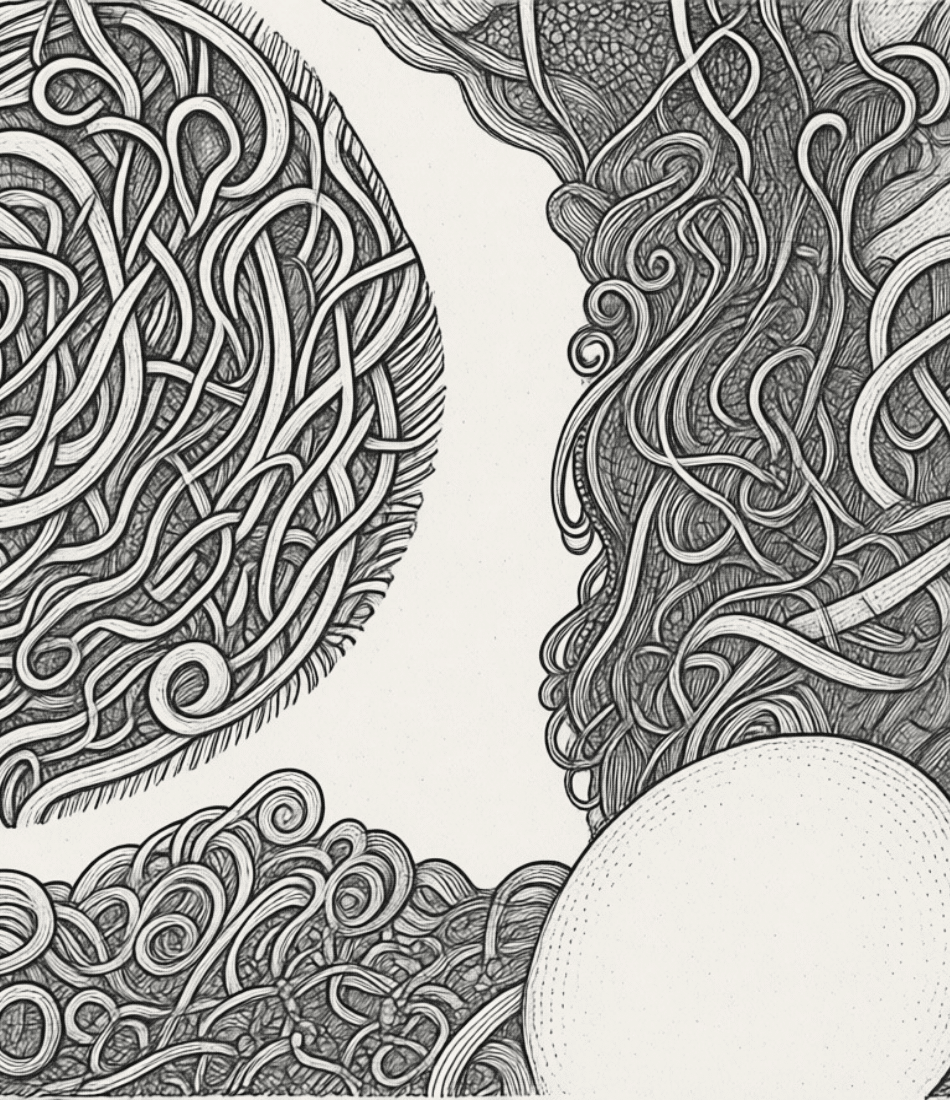
No Matter How Closely You Look at Something, There is More to See
Prior to my cancer journey, I created elaborate drawings that appeared simple at first glance but were overwhelmingly detailed on closer inspection.
They expressed my belief that no matter how closely we look at something, there is always more to see. Later during chemotherapy, I learned that “In every second is a snapshot of infinite beauty and awe.“
These two outlooks were instrumental in facing my greatest moments of discomfort, because they enabled me to cherish the sweetness of each second and see past the pain.
Admire Every Detail
I want you to look around your environment for something ordinary and mundane that you can comfortably hold in your hand. This could be a pencil, pen, paper clip, or even a soft teddy bear. Whatever you choose, it should be something you see every day or an item someone might find boring to look at.
Now I want you to close your eyes and take a deep breath. Give your sight some time to reset so that when you open them, the light of life slowly creeps under your eyelids.
Now I want you to stare at the ordinary item you chose and hunt for details you don’t normally see. While at first you may decide there is nothing special about it, the item is as it has always been, but if you take the time to really admire it, an abundance of detail will become apparent to you.
Right now I am looking at an ordinary grey plastic pen. While normally I wouldn’t pay it any mind because it’s just a boring old pen, when I stare intently at it, I see a beautiful landscape of detail.
I can see the slight bend in the broken cap, the etched logo in the plastic, and how the paint fails to fill each crevice. There are lines, like veins, that run within its semi-translucent body. Inside it is a mostly full ink cartridge, but when I write with it, the ball barely moves or makes any marks. It feels smooth and firm between my fingers, except near the point of the pen, where the ridges of each plastic segment have been fitted together.
I could continue describing this object, and if you took the time, you could do the same with the object you are investigating.

Find the Joy in the Moment
When you try to admire every detail, it opens the door to observing the world in a new light. Colors appear more vibrant, scents seem to have notes you never noticed before, and your sense of taste begins to sample flavors you’ve never known.
This happens because you are paying attention in ways you never did before. The immediate benefit is how interesting it makes your environment. All of the little things you’ve traditionally ignored become art pieces to admire and contemplate.
This practice invites you to find the joy in the moment, because there is so much to see and experience. In many ways, it’s like living like a child again, because a new world opens up to you.
Look Beyond the Pain
When you are hurting, listen beyond the siren blaring into your ears. The pain can be loud, but if you can separate the emotional charge from the physical information being conveyed to you, you might be able to identify what your subconscious wants you to know.
Ask, “What is that sound, what is it trying to tell me, and how does my body want me to react?” Generally speaking, the brain wants us to do one of three things when we experience pain.
It might be saying:
- Hey, I’m kind of concerned; could you take a look at this? Your brain wants you to investigate the area to identify what is happening.
- Whoa! Stop what you are doing, I’m afraid. Your brain is afraid that something bad is happening or you are about to get injured, so it wants you to do something different.
- Please help me, please help me, please help me! When your brain thinks there is an active injury, it wants you to take steps to care for it.
In your pain management coaching sessions, we will discuss how to remove the fear and catastrophizing terms often used to describe the experience of pain. This practice will help you remove the emotional charge from your brain’s attempts to protect you.
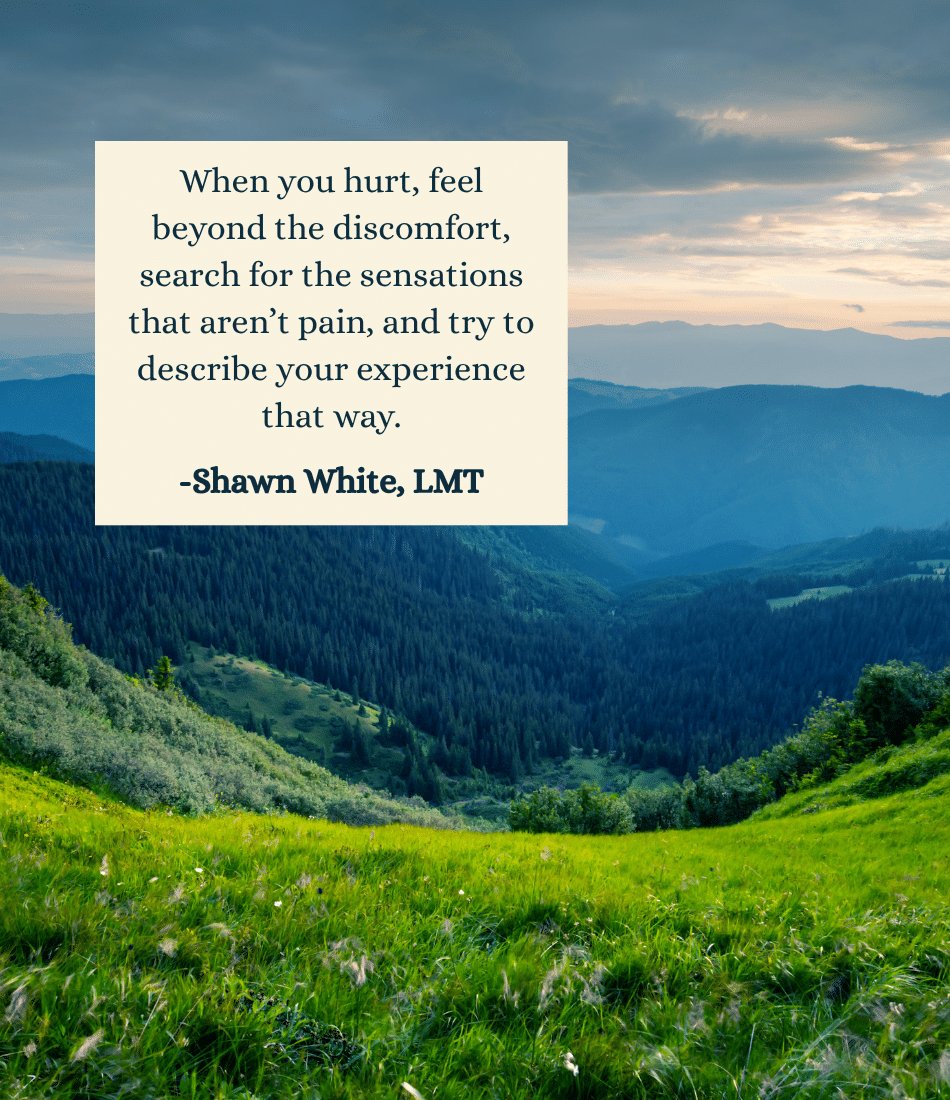
Listen to Your Pain
When most people experience pain, they hear the siren and tend to react in one of two ways. They either ignore it and push forward as if nothing happened, or they hyper-focus on the sensation without ever asking what the brain is trying to say.
The Mosquito Bite
When you are bitten by a mosquito, it itches. This is your brain saying, “Hey, take a look at this; I think we were injured by something.” It wants you to investigate the injury to assess the extent of the damage.
The best way to address a mosquito bite is to assess and acknowledge it, apply an ointment to prevent infection, and then ignore it.
It’s going to itch for a while as your brain keeps telling you something is wrong, but it is up to you to demonstrate that everything is okay. After a while, the itch will go away and your day will once again be right as rain.
What Does The Brain Want?
Managing pain works the same way. When the brain creates pain, it wants you to investigate what it has detected, assess and acknowledge it, take the necessary steps to address it, and then continuously remind it that you are safe.
Finding Purpose in Chronic Pain
Our internal systems often mirror how we experience relationships with the people in our lives. The parallels between how we mirror and co-regulate with others are often strikingly similar to how our subconscious and conscious minds interact.
As you begin to witness this, you will discover your own ways to manage your pain and live your highest quality of life based on what you need from others and what they need from you.
Integrating It
If you want to develop effective coping strategies to manage your pain, you have to be open to changing your mind about one thing. If you are approaching pain management with a closed mind, nothing will ever change. You will continue to follow the same path, expecting different results but yielding the same gain.
What that one thing is doesn’t matter, because it is different for everyone.
Are you ready to try something different, walk a new path, and see the world in a more vibrant light? I know you have it in you, because I know that:
- You can have hope.
- You can give purpose to the pain.
- You can use your hurt to help others.
- You can develop your mind-body awareness and learn the language of pain.
- You can witness the infinite details of existence, and know peace.
Disclaimer
All information provided on this website, including, but not limited to, educational materials, pain neuroscience explanations, treatment suggestions, and any other content shared during sessions, classes, or coaching, is for educational purposes only. It is not intended to diagnose, treat, cure, or prevent any disease or medical condition, nor is it a substitute for professional medical advice, diagnosis, or treatment.
You should always consult a qualified healthcare provider for medical concerns, and never disregard professional medical advice or delay seeking it because of information you receive here.
Recent Posts



Jennifer Brand Spa
Pain Management at 2717 Hwy K, O’Fallon, MO 63368