
Neurotags
Learn how your brain uses neurotags to identify safety and danger and how that influences your state of pain.
You Can Change
Discovering Hope
For years preceding my cancer diagnosis and most of the decade afterward, I existed in a near-constant state of unimaginable agony. It was the kind of pain that leeched away the delightfulness of the day until I felt like a boiling cauldron of woe.
Although I hurt tremendously so, I never let go of hope. In the most challenging and unforgiving moments, I held onto my hope because it was the only force keeping my feet moving forward.
During chemotherapy, I provided myself with reminders that I was alive and that I had a life worth living. Some of these powerful reminders included:
- Hope is like a mouse who is tiny and sweet, but can often be sneaky, slippery, and scary. Hope is always good, beautiful, and great, so we must be mindful when we hold her to keep her safe.
- When we give purpose to the pain the suffering ends.
- Every challenge we face is an opportunity to help someone else.
- In every second is a snapshot of infinite beauty and awe; no matter how closely you look at something, there is always more to see.
These reminders helped me navigate each day, always looking ahead with the hope that everything would be okay.
Discovering Pain Neuroscience
When I was going through chemotherapy, I looked forward to the pain going away. I believed that once the treatments were over, the pain would fade. To my surprise, the pain did not go away; instead, it worsened.
Rather than allowing the agony to extinguish my inner light, I tried to live my best life so I could understand and manage my pain. This set me on a path guiding me toward pain neuroscience, the biopsychosocial model of pain, and eventually the teachings of Lorimer Moseley and David Butler.
The way these pain scientists explained pain changed how I thought, felt, and understood it. They introduced me to three core concepts:
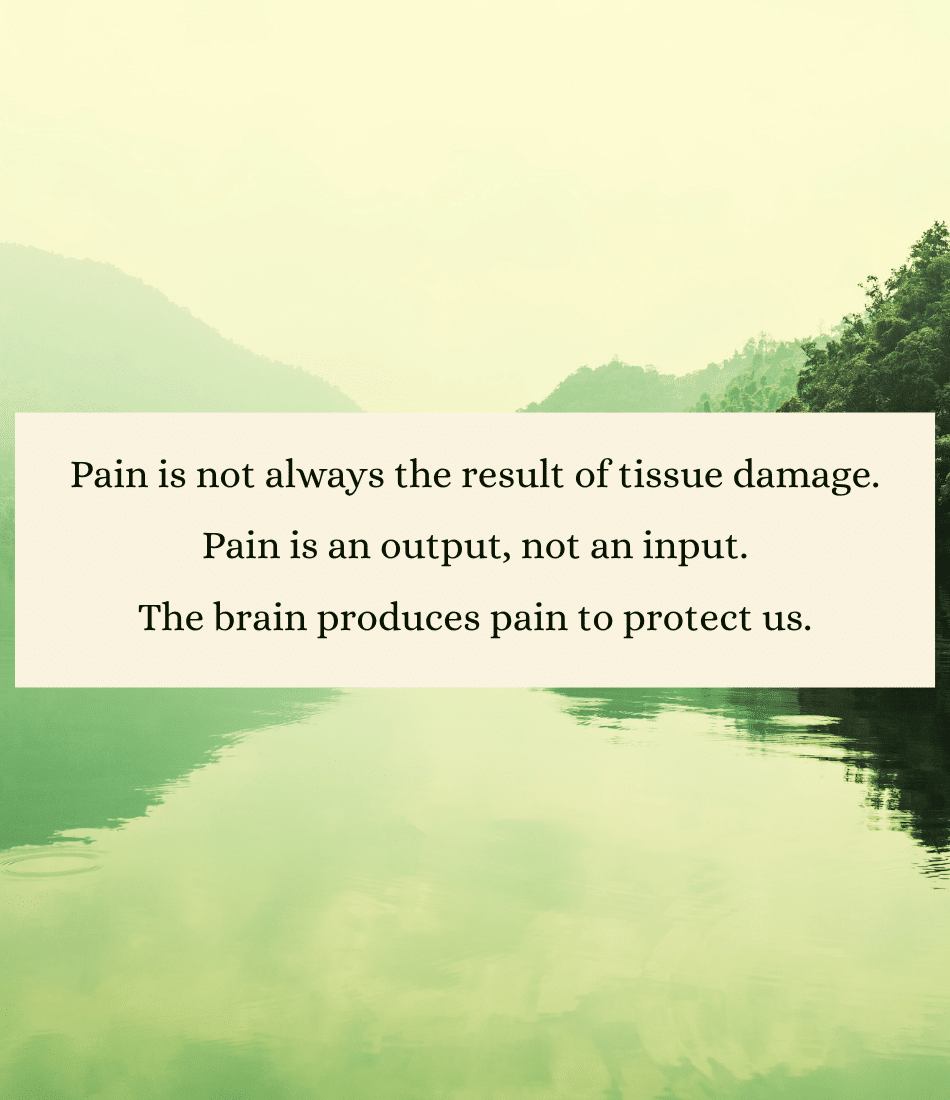
- Pain is not always the result of tissue damage.
- Pain is an output, not an input.
- The brain produces pain to protect us.
All three of these concepts are tied together with a beautiful bow called neurotags.
Pain is an Output
Why does my pain keep coming back even though nothing is wrong? Pain is not a signal from damaged tissue; it is an output by the brain. The brain uses neurotags to determine whether it is safe or under threat.
If you have ever heard the term nociception, I want you to know that nociception is not pain. Instead, it is a warning signal to notify your brain of potential injury.
What is a Neurotag?
What is a neurotag? Neurotags are the brain’s way of evaluating what is happening within and around your body to assess danger and safety.
They are networks of brain cells (neurons) that work together and often compete with one another to create the feelings and sensations that you experience every day.
Without them, you wouldn’t feel nervous standing at the weak edge of a dangerous ledge, or enjoy the safety and warmth of a loved one’s hug.
DIMs & SIMs
There are two primary types of neurotags: DIMs (Danger-In-Me) and SIMs (Safety-In-Me).
- DIMs are patterns of potential danger that indicate protective responses are necessary.
- SIMs are patterns of safety that indicate it should dial protection (and pain) down because everything is right as rain.
Your brain uses DIMs and SIMs as evidence for how it should respond to the information it receives from the body.
It is important to note that you do not feel any sensation until it has been first processed by the brain, because pain is an output, not an input. This might raise the question: “Is my pain all in my head?” Your pain is real; all pain is real. If you feel it, it exists.
DIMs and SIMs allow us to influence the experience of pain, but it requires patience and self-regulation, both of which I am confident you are capable of. If you have made it this far in pain, I am certain you have what it takes to replace your threat patterns with safety.
Why Does My Neck Hurt?
Why does my neck hurt if there is no injury? Even without injury, your brain constantly weighs DIMs and SIMs. If the DIMs currently outweigh the SIMs, your brain errs on the side of protection when you look down at your phone for long periods, turn your head suddenly, or don’t get enough sleep.
Dealing with Ongoing Pain
If your neck continues to hurt, you need to find ways to replace your DIMs with SIMs. This entails developing patterns of safety that remind your brain that your neck is okay and doesn’t require protection.
The Protective Response
When your brain receives information, it weighs the evidence from DIMs and SIMs to decide whether to trigger a protective response.
- Investigate the area: Pain and heightened awareness draw your attention so you notice and check what is happening.
- Stop or change what you are doing: The brain is trying to reduce the chance of adding further threat or tissue stress while the situation is still being evaluated as potentially dangerous.
- Take action to address the injury: Your brain is trying to orient your behavior toward resolving or reducing the detected threat.
These protective responses help keep you safe. For example, if you banged your elbow on a doorway, the sudden pain would cause you to look at or rub the spot to see if it is okay.
If you were walking and twisted your ankle, the pain would slow you down, make you limp, or cause you to stop putting weight on that foot. Afterward, you would want to sit down, elevate the foot, or apply ice to it.
These are all examples of DIMs that inform you of potential or actual danger. They are called adaptive DIMs because they are credible sources of danger that help you seek safety.
Maladaptive DIMs
Not all DIMs serve you; some create pain when there is no danger. These are called maladaptive DIMs. In pain management, I help you identify your maladaptive and adaptive DIMs so you can retrain your brain so you no longer experience unnecessary pain.
SIMs
SIMs are pieces of evidence or cues your brain collects that tell you that you are safe. Some examples include feeling supported, having a positive or reassuring attitude, sitting in a calm space, getting a massage, or having a clear understanding of what is happening around you.
When SIMs outweigh DIMs, the brain is less likely to produce a response, like pain, to protect you.
For clarity’s sake, neurotags are not anatomical structures you could point an MRI at; they are a useful metaphor for distributed, dynamic networks of brain activity.
Another important note: they are not personified parts of the brain, meaning they do not think on their own; instead, they are part of how the brain functions.

Neurotags Compete
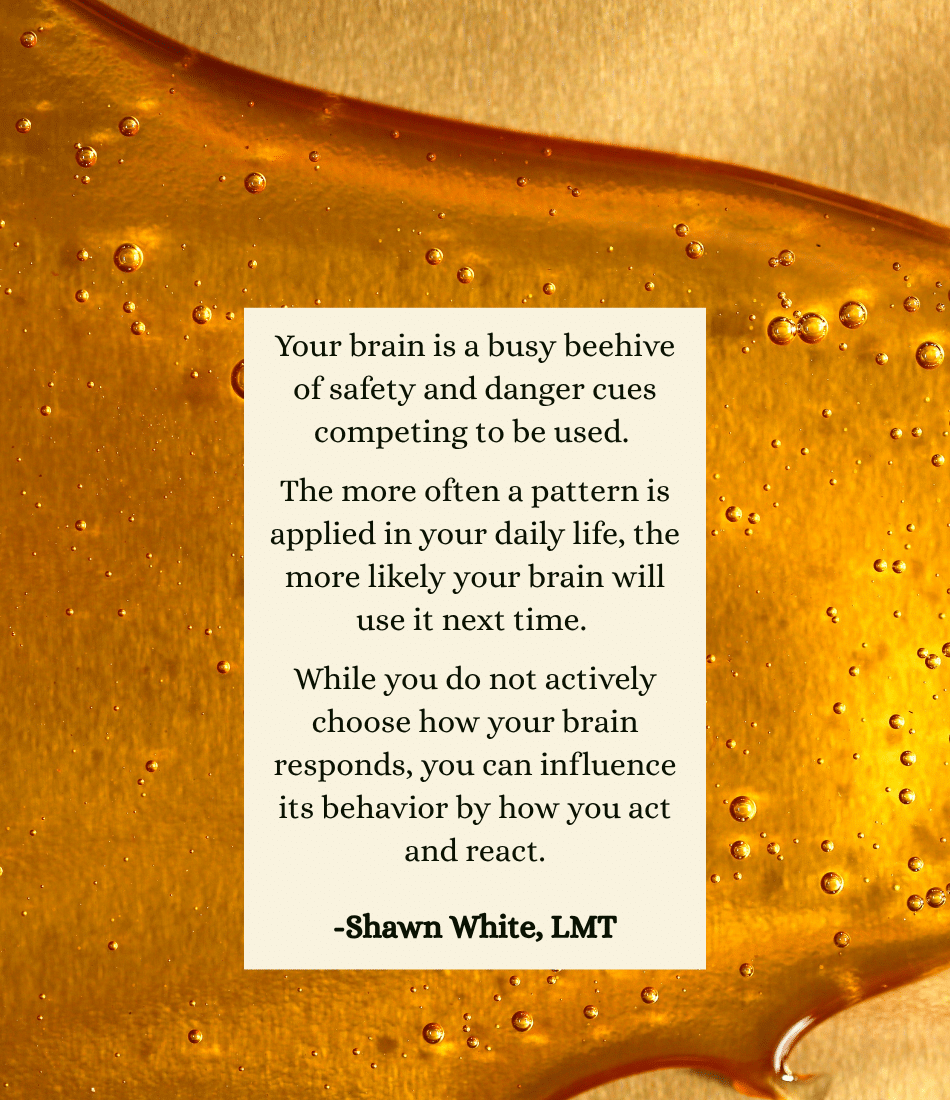
Your brain is a busy beehive of safety and danger cues competing to be used. The more often a pattern is applied in your daily life, the more likely your brain will use it next time.
While you do not actively choose how your brain responds, you can influence its behavior by how you act and react.
You can interrupt its pattern of pain by engaging with routines of safety, comfort, and personal care. When you introduce patterns of peace and calm, your brain begins to listen, and over time, it can help strengthen your sense of safety, encouraging the balance toward safety when your cues compete.
Neurotags are like Templates
Although neurotags are distributed patterns of brain activity that are dynamic and context-sensitive, it can help to think of them as templates.
Imagine you were a seamstress deciding which dress to make from a piece of fabric. You would lay a template onto the material to see how well it fits the situation.
When your brain decides whether to produce pain, it uses neurotags, much like a seamstress uses patterns and templates, to gauge whether the circumstance is threatening enough to warrant pain as a protective response.
As a seamstress, you would not rely on just one template. Instead, you would lay several different patterns side by side on the same piece of fabric to compare them and decide which one best fits the material and the situation.
The brain mirrors this behavior by simultaneously applying multiple different neurotags to the same situation. These competing and collaborating networks help determine the most appropriate response.
Breaking the Pain Spiral
Like a snowball rolling down a hill, pain can quickly gain momentum and spiral out of control when you feed it with worry, fear, or catastrophic thinking. The more you give into the fear of pain, the worse it often becomes.
I invite you to pause and reflect. How do you typically react when you feel pain? Can you spot any thoughts, behaviors, or habits that might be adding extra stress or anxiety to the experience?
Imagine how different those moments might feel if you took a deep, calming breath, imagined a safe, tranquil space, or gently reminded yourself that everything is going to be okay.
These practices help bring down the intensity of the moment by interrupting catastrophizing thoughts, so you can focus on something calmer and more comforting.
When used consistently, these practices help reduce the effects of central sensitization. Central sensitization is when the nervous system becomes overly sensitive, often leading to increased or prolonged pain. Safety cues, calm breathing, and positive reframing can help reduce that hypersensitivity over time by lowering threat and building stronger safety patterns.
Shaping Your Neurotags
How you respond to the experiences of daily life helps create and shape your neurotags. They are formed and strengthened through learning, repetition, and the context in which those experiences occur. Neurotags can change because they, just like you, benefit from bioplasticity.
While you can’t always control which neurotags activate in the moment, you can influence how they develop over time by how you interpret and respond to perceived danger and safety.
When you consciously choose curiosity instead of fear, acceptance instead of resistance, or safety-seeking actions instead of avoidance, you are applying a helpful filter. These conscious choices help strengthen safety neurotags and gradually weaken the influence of danger neurotags. Over repeated practice, this shifts your brain’s automatic threat response, making pain less frequent or intense.
Your Pain Can Go Away
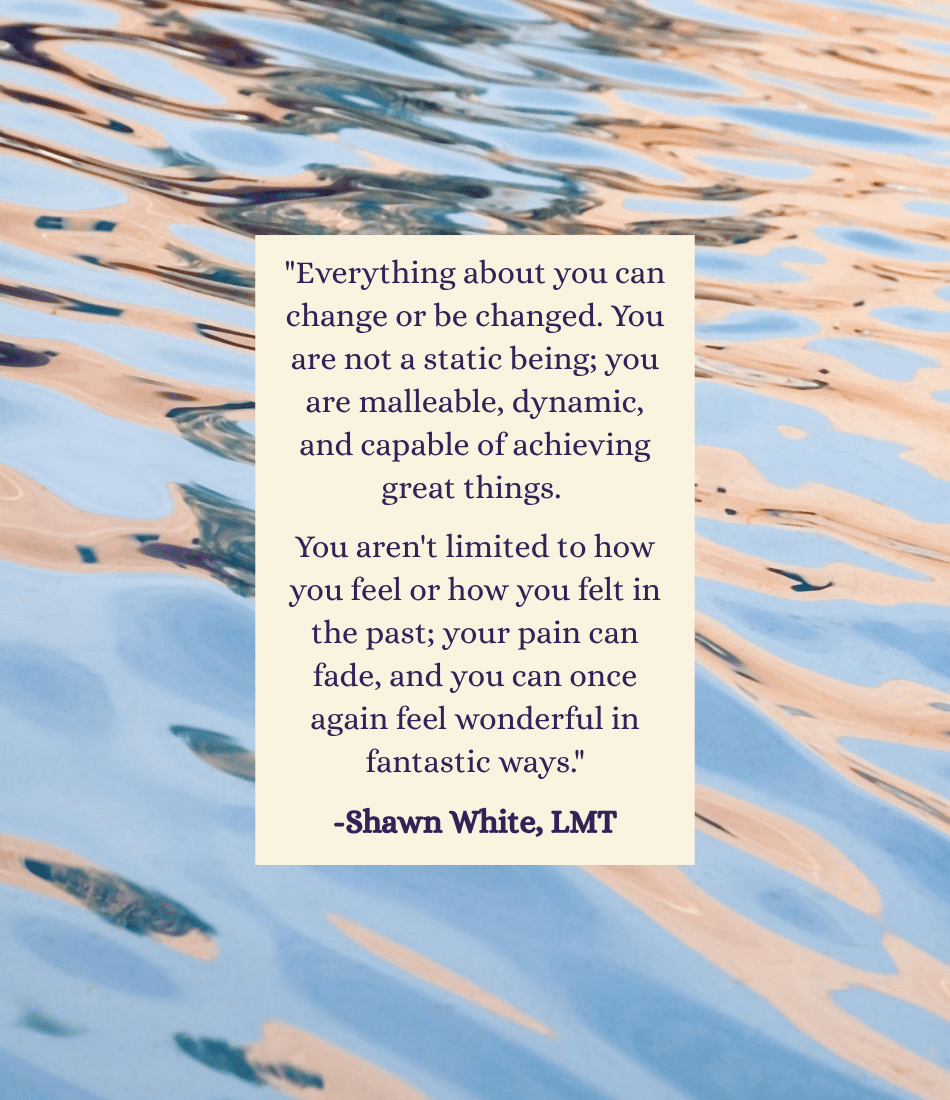
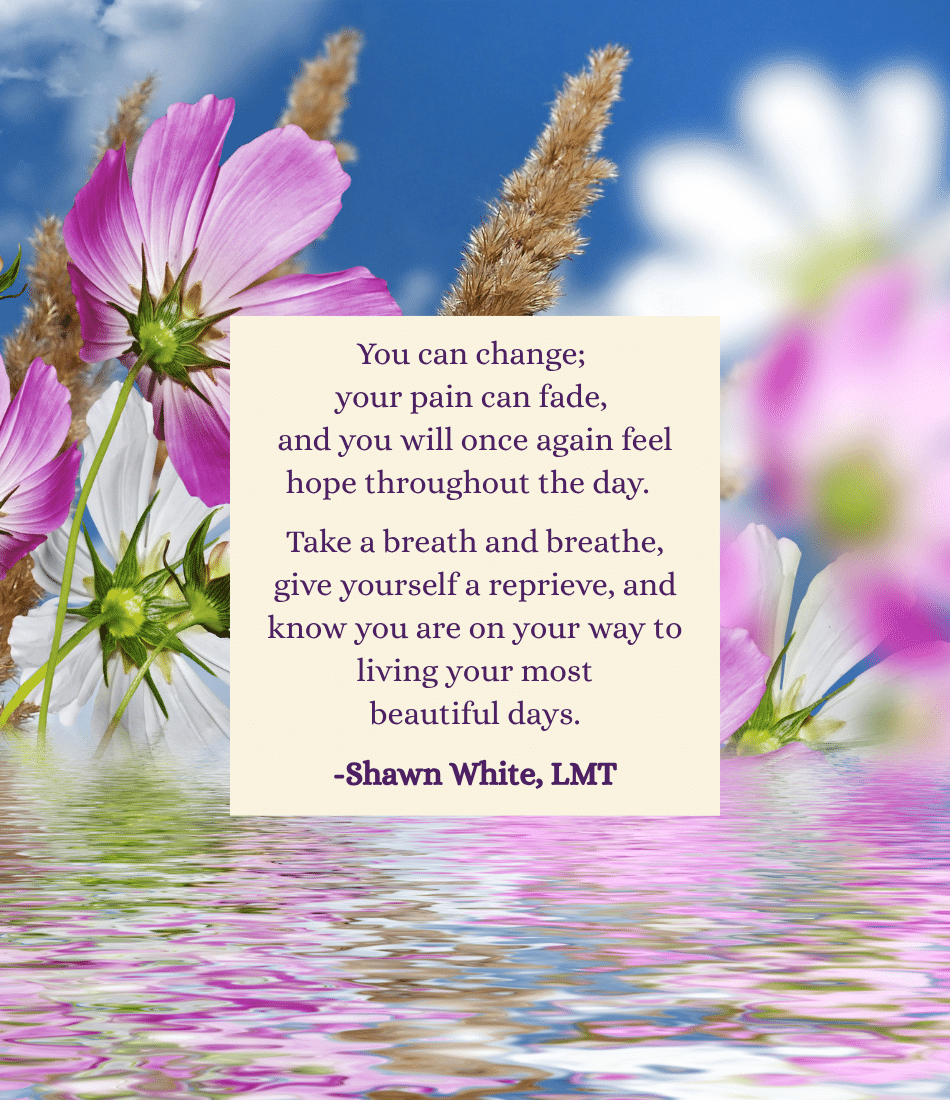
You can change; your pain can fade, and you can once again feel hope throughout the day. Suffering isn’t a state that we have to endure forever; it can and will go away. While it may be challenging to accept this today, you are on your way to living your most beautiful days.
Safety & Danger
The perception of safety and danger is a fundamental part of the human experience. As uncomfortable as pain can be, without it, you would get sick and injured far more often.
Your nervous system uses pain to protect you when it detects danger and dials it down when safety is restored.
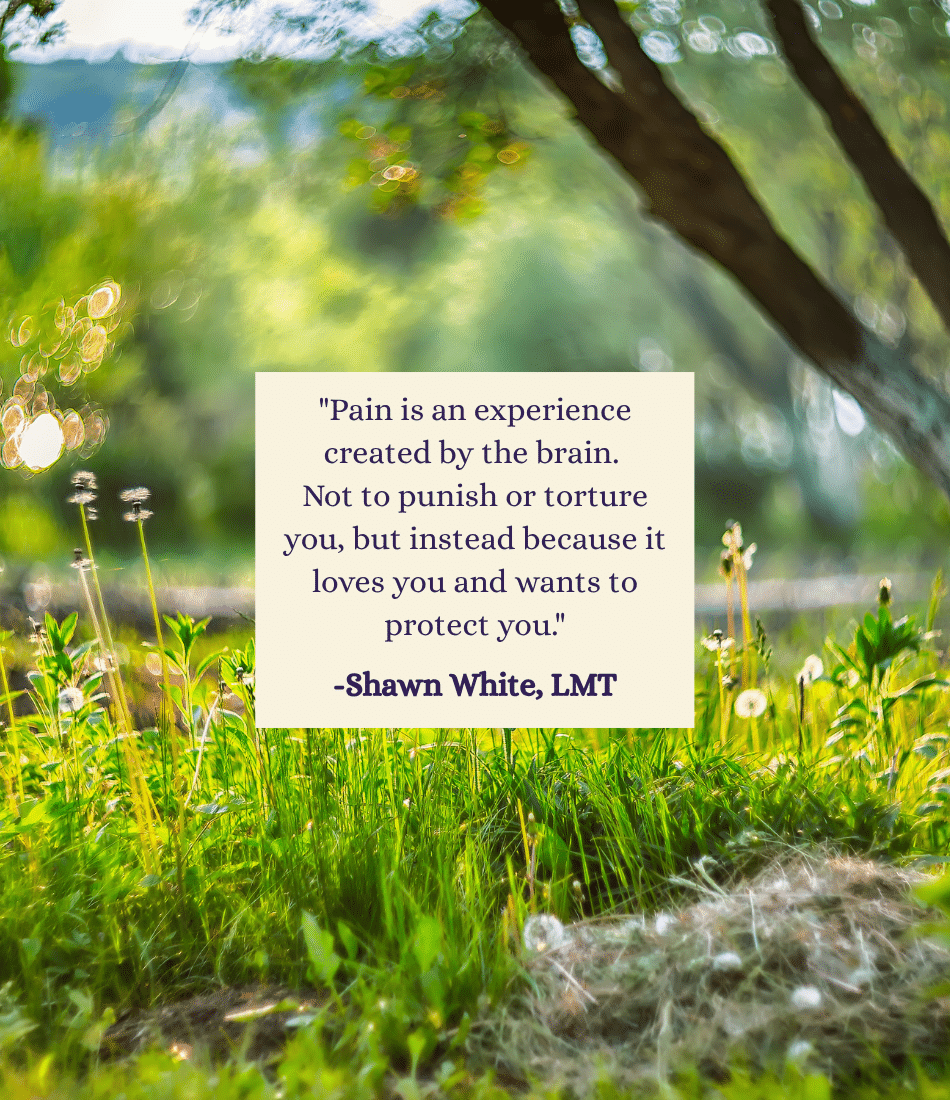
One of the most impactful things I learned about pain is that it is an experience created by the brain. Not to punish or torture you, but instead because it loves you and wants to protect you. When I truly understood this, it reframed everything. I stopped getting angry at the discomfort, and instead accepted it as an act of kindness; sure, it was a tough-love type of kindness, but loving all the same.
Changing how I thought about pain transformed how I experienced it. Once I understood that pain was one of the ways my brain tries to protect me, it softened the anxiety typically associated with it. By willfully and consistently reminding myself that my brain produces pain to protect me, I created a new safety pattern (neurotag).
The brain seeks out the most credible sources of information to create the most accurate response. It learns through pattern recognition. The neurotag that is activated most often and in the most relevant contexts tends to become the strongest and most credible source.
Now, when pain starts, I tend to remain calm instead of spiraling into worry about how bad it feels, what’s wrong with me, or how uncomfortable it may become.
Ready For The Next Step?
If the idea of neurotags gives you hope that change is possible, pain management coaching can help you put that understanding into practice. Together, we can explore how to strengthen safer patterns and respond to pain with more clarity and confidence. Learn more about Pain Management Coaching.
Disclaimer
All information provided on this website, including, but not limited to, educational materials, pain neuroscience explanations, treatment suggestions, and any other content shared during sessions, classes, or coaching, is for educational purposes only. It is not intended to diagnose, treat, cure, or prevent any disease or medical condition, nor is it a substitute for professional medical advice, diagnosis, or treatment.
You should always consult a qualified healthcare provider for medical concerns, and never disregard professional medical advice or delay seeking it because of information you receive here.
Jennifer Brand Spa
Pain Management at 2717 Hwy K, O’Fallon, MO 63368