Basic Massage Techniques
Massage Techniques
In massage school, instructors usually start with the five basic massage techniques. Sometimes called the five basic Swedish massage techniques, these movements offer a decent introduction to how you can massage the body. If you would like to learn the origin of these terms, read my massage history article.
- Effleurage: Whether you spell it as effleurage, or effleruage this technique uses long, gliding movements that tend to be light to medium pressure. Many massage therapists use this technique to apply oil.
- Tapotement: Tapotement is a rapid and rhythmic percussive movement.
- Friction: Uses cross-fiber friction movements.
- Petrissage: Kneading, rolling, or lifting soft tissues.
- Vibration: This technique uses gentle trembling movements or motorized vibrating devices.
I see the five basic massage techniques as explorations of touch. They invite initiates like you to develop new ways to apply pressure, create unique approaches, and craft rich sensory experiences.
Palception
When you practice massage, start by placing your hand on their back. When you do, feel with the entire surface of your hand. Be present, take a breath, close your eyes, and truly feel.
Hold your hand in that spot without moving; stay there and resist the urge to pull away. As you maintain that position, shift the weight of your hand so each area can feel something new. Pay attention to the sensations inside your palm; explore how the pads of your fingertips gently smush as you press in, and expand as you release.
Notice the sensations you are experiencing, and think about naming them. We want to keep you in your body, so if you are struggling to find the right words to describe what you are feeling, acknowledge it and let it go. This is not an English exam; it is an exploration of being human and alive.
Most people do not have the somatic vocabulary to articulate what they feel when they touch someone, because they have never been invited to develop their mind-body connection. It’s okay if you can’t find the right words; most people struggle at first, but I’m confident you will be an expert at this in no time.
What you just did was the first step of palception. Palception is the heightened sensory awareness experienced during palpation. It is a three-step process:
- Perceiving how the act of touch feels to you,
- Imagining how your touch may feel to someone else,
- Applying that information to create a pleasurable massage.
You are doing a great job! Give yourself a round of applause for having the boldness to try something new.
Tactile Dialogue
The second part of palception is intertwined with tactile dialogue. Tactile dialogue is the back-and-forth communication that occurs between a giver’s touch and the receiver’s body. As you apply pressure, stay acutely aware of what is happening under your hands. Feel for how they involuntarily respond to your touch.
At first, noticing these details will be challenging, but as you develop your touch acuity, you will feel subtle contractions in the muscle, nearly imperceptible twitches, and even the muscles relaxing under your hands.
Muscle Knots
Most everyone who performs a massage, whether professionally or at home, talks a lot about muscle knots. Today, I am going to help you understand them in a practical, compassionate way.
There are two types of knots:
- The pain you use to describe an area that hurts,
- The bumps, lumps, and perceived abnormalities that someone feels with their hand.
When performing a massage, the only knots you should focus on are the ones someone uses to describe the location of their discomfort.
Ignore the things you think are knots
Anything you feel with your hand is likely irrelevant. Most times when someone feels a knot, they are actually feeling a bone, a thicker muscle, maybe some swelling, or palpatory pareidolia. Palpatory pareidolia is a fancy phrase for feeling something that isn’t really there. Seeing Elvis’s face on a burnt piece of toast is an example of pareidolia.
Rather than assuming something is wrong with someone’s body when you notice asymmetry, ask them how it feels in that area before you increase pressure or start working on it.
Most people don’t study anatomy and physiology as a hobby, and even fewer people have explored the human form to know what is considered normal and abnormal in specific areas.
Most often, people find muscle knots in the back, between the shoulder blades, and around the neck. Many of these knots, especially between the shoulder blades, are ribs, and when you press on them, they hurt because you are creating a vice with your finger and their bone. Of course it hurts; you are squishing their muscles.
How often are you touching your own back to know what is normal? Could you accurately identify the muscles of your back, how they are shaped, and their density?
In pain management massage, I never tell people they have knots, because the world tells us every day that something is wrong with us; life can already be rough, and I don’t want to contribute to the misery. Instead, I want to inspire and lift the spirits of the people around me. If I tell someone they have a bunch of knots, it gives them something else to worry about and overfocus on.
If someone tells me they have a knot, I listen; most times, people just want to know someone believes them when they say they are hurting. I will always believe you when you tell me you are in pain. You could be laughing, prancing, and singing your favorite song, and if you told me you were in ten-level pain, I would believe you and do everything I could to help you feel better.
Rather than focusing on what you think are knots, communicate by asking questions and actively listening. You will be far better equipped to help someone feel heavenly when you are receiving information from the source, rather than relying on your intuition to decide where they hurt.
Intention
Prior to applying a technique, ask yourself what the intended outcome of its application is. Like a story, every word, paragraph, and page needs to contribute to the narrative. If it is just filler, it needs to be removed.
In a massage, any technique that doesn’t contribute to the session’s goal is called a junk move. Junk moves are techniques used to waste or fill time. While the person you are massaging might not know you are using junk moves, they will feel like something is off about the session.
Be purposeful with your touch; have a goal in mind so you stay present in the moment and focused on them.
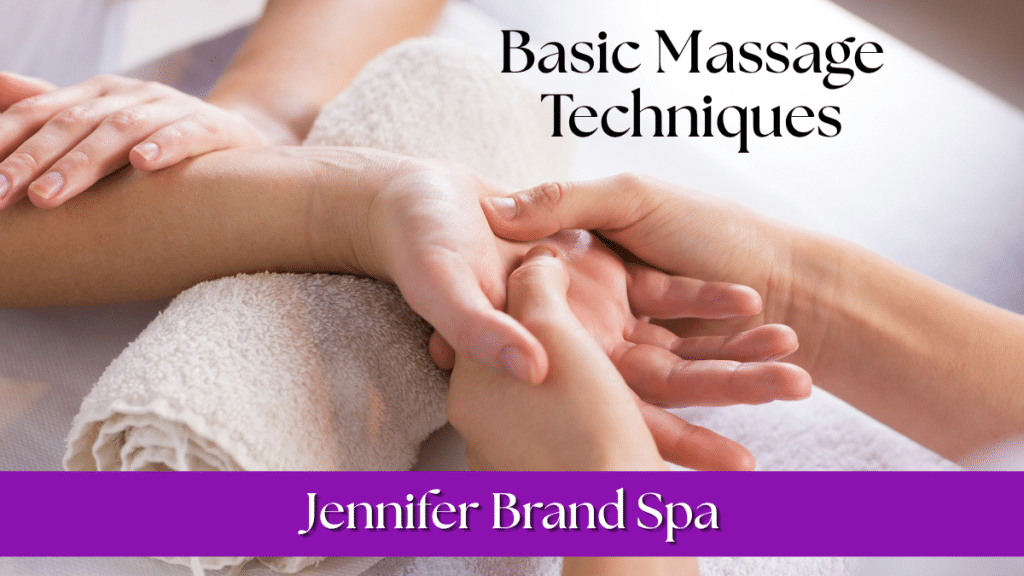
Practical Massage Techniques
The body tends to prefer touch that feels like your hands are moving through water. This means angling your hand so you use more of a scooping motion than pressing down or squishing their soft tissues.
If you are squeezing the muscles, be mindful of where you place your fingers and thumb. When you use your fingers and thumb to grasp or grip a muscle, the sensation can easily feel like a painful vice. Your goal isn’t to crush the muscle; doing so may provide temporary relief, but it risks reinforcing a negative neurotag, or a DIM (Danger-In-Me).
Also, if you are new to massage and frequently use your thumbs, do your best to avoid using them to deliver pressure. When you schedule a massage class with me, I will teach you how to massage without putting pressure through your thumbs. This matters because using your thumbs increases your risk of injury.
In my advanced classes, I discuss the elements of touch, which help you improve the quality of your touch and your awareness.
Two Techniques to Practice
Rather than adhering to the five basic techniques, I prefer to start with what I call straights and circles.
- A straight is any massage movement that follows a mostly straight path. It can be short or long, and use any degree of pressure.
- A circle is a spiraling pattern of touch. It may be big or small.
When you are first starting out, simplicity is key. The next time you have the opportunity to massage someone, perform long, gliding strokes with one hand as though you were trying to paint an entire area with finger paint.
Use the rule of three: perform each variation of the technique three times in the specified area. For example, the forearm could be divided into three sections: the outer parts on each side, the pinky and thumb, and the middle area. Apply three straight strokes moving toward the elbow from the wrist in each third of the arm, then do it again moving the other direction.
After performing straights on the forearm, apply circles starting with the wrist, massaging the same area. Try to use one consistent movement throughout.
When you take the Discovering Safety Within massage course, I will teach you these principles in your massage class.
How to Massage Tips
Here are five ways to protect your body when performing a massage.
- If it hurts, don’t do it. If you perform a technique that hurts twice, you will do it a thousand times. Be kind to yourself every time you perform a technique.
- Find someone to practice with. Request honest feedback and have fun.
- Be mindful of your movements. Make sure each technique feels comfortable as you perform it.
- Conserve your energy. Sit and stand as needed.
- Remember to breathe. Avoid holding your breath as you massage.
A Fun Massage Class
If you’ve been searching for a “massage class near me” or even a massage mentor to help you fill the gaps from massage school, you are in the right place.
This is not a rigid, one-size-fits-all workshop. Instruction is personalized. If you don’t have a massage table, Shawn teaches practical alternatives for a couch, a chair, or even the floor. The focus stays on what you will actually use together at home.
Throughout the session, you’ll observe clear demonstrations, practice hands-on, and receive kind, useful feedback. Communication is woven into every part of the class so you learn by example.
What to Expect
Your class is completely private, just you, your partner, and Shawn. You’ll receive clear demonstrations, plenty of hands-on practice time, and real-time guidance so the techniques feel natural. The atmosphere is relaxed, encouraging, and often filled with laughter. Most couples leave feeling more confident, more connected, and equipped with skills they can use right away.
Basic Techniques of Massage
Your class is completely private, just you, your partner, and Shawn. You’ll receive clear demonstrations, plenty of hands-on practice time, and real-time guidance so the techniques feel natural. The atmosphere is relaxed, encouraging, and often filled with laughter. Most couples leave feeling more confident, more connected, and equipped with skills they can use right away.
Disclaimer
Information provided on this website, including educational materials, pain neuroscience explanations, treatment suggestions, and any other content shared during sessions, classes, or coaching, is for educational purposes only. It is not intended to diagnose, treat, cure, or prevent any disease or medical condition, and is not a substitute for professional medical advice, diagnosis, or treatment.
You should always consult a qualified healthcare provider regarding any medical concerns. Never disregard professional medical advice or delay seeking it because of information you receive here.
O'Fallon Massage
JB SPA
2717 Hwy K, O’Fallon, MO 63368