
Somatosensory Map
Somatosensory Map
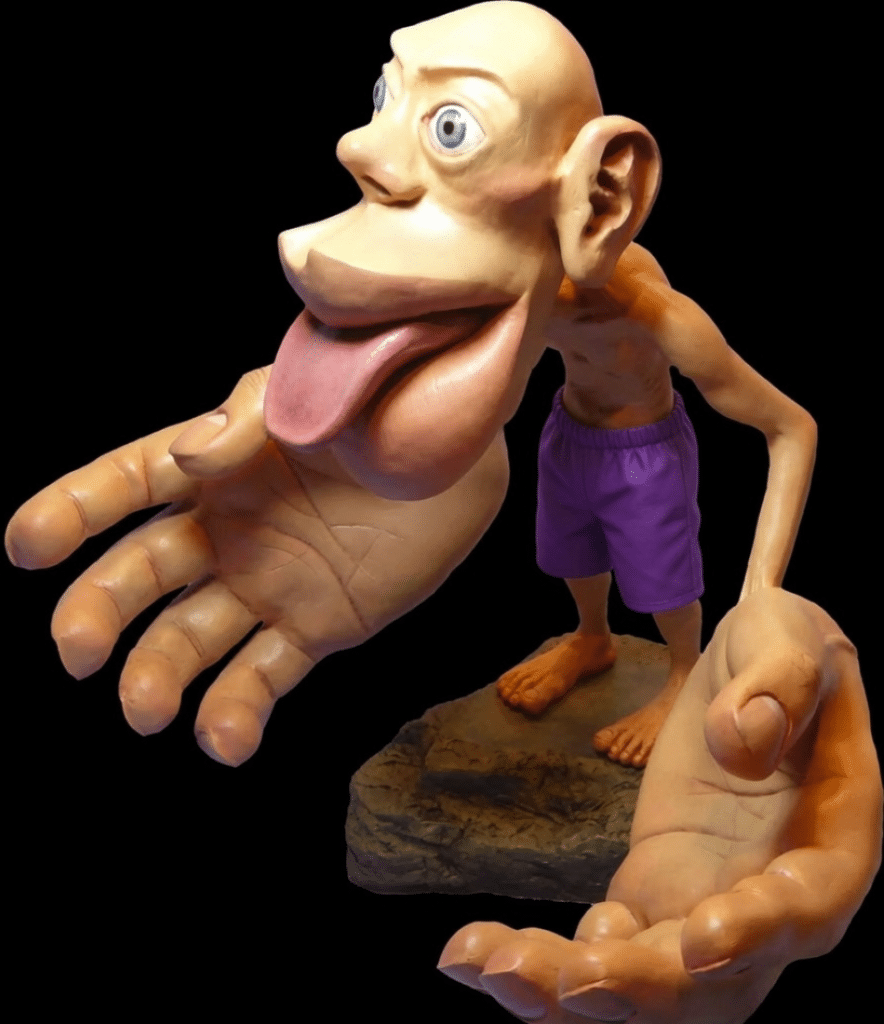
The somatosensory map is the brain’s representation of the body. It is the image right above this text, and it is weird to say the least.
Our nervous system doesn’t have eyes as we do, so it relies on the sensory data available to it. As a result, its mental image is of a bulbous, distorted figure with exaggerated features. It looks weird and disproportionate because the areas with higher receptor density and sensitivity appear larger.
Another map may appear in your search results; it still looks weird because it illustrates a brain with body parts overlaid on top of it. This map helps neurologists protect sensitive brain regions during surgery.
Your brain doesn’t understand sensation from a centralized sensory strip. Instead, it uses a cortical body matrix, a dynamic, widespread neural network that uses neurotags to produce output.
Sensory Buttons
Your somatosensory map is like a holographic image of your body within your brain. Sensory ‘buttons’ light up on the map as the corresponding areas of your body are pressed, creating sensation.
Before the corresponding area lights up, the brain evaluates the signal from the ‘button’. In this imperceivable moment, the brain’s neuromatrix, primary somatosensory cortex (S1), and insular cortex assess the signal to determine how it should be felt.
When your body is massaged, your therapist is pressing ‘buttons’ on your body to update the brain’s holographic map. Each technique updates your brain’s somatosensory map.
Pain Management Massage
Pain Management massage is a type of medical massage that helps your brain redraw its somatosensory maps. Your session may include sensory discrimination techniques, applications to reduce cortical smudging, graded motor therapy, hybrid neurotag retraining, and comforting hands-on therapy.
The traditional approach to massage, which is a full-body session with limited focus on each area, helps update the somatosensory map. However, its benefit is limited because the brain is not given the opportunity to identify a pattern of safety.
Traditional massage feels good, which is beneficial, but it’s a passive type of neurotag retraining. To effectively update the somatosensory map, you must be consciously aware of and focused on each sensation, and each technique must be performed enough times for your brain to predict safety.

Sensory Anticipation
Neurotags retraining occurs when the brain can anticipate safe sensory input and imagine how that safety will feel.
Each sensory ‘button’ must be pressed enough times for the brain to predict that it will be pressed again.
If I keep repeating this message, your brain will anticipate what you are about to read, because it hunts for patterns. It would be a reasonable conclusion for you to expect me to say once again that “a button must be pressed enough times for the brain to predict that it will be pressed again.”
Once your brain has discovered a pattern, it creates a new neurotag. If you predicted I would say, “a button must be pressed enough times for the brain to predict that it will be pressed again,” then you have created a new neurotag.
PAP Threshold
There is a negative threshold for this approach, and once it has been crossed, it can have the opposite intended effect. The overuse of repetitive stimuli can result in habituation or overstimulation.
This is why the PAP Threshold, also known as the pleasure-annoyance-pain threshold, is so important in the application of touch. While repetition is important, so too is variety. In the absence of variety, the brain becomes annoyed, and if the stimulation continues, it can result in pain.
Pain management massage accounts for this phenomenon, ensuring that every technique contributes to your experience.
Rewriting The Map
The key to rewriting our somatosensory map is through our mind-body connection. When we have a healthy mind-body connection, we become more attuned to our bodies’ needs, can address concerns before they become problems, and create a space for our mind and body to feel safe.
Focus On What You Feel
If you want to rewrite your somatosensory map so that you live with less pain or can experience sensations more accurately, avoid zoning out during a massage.
Instead, focus on what you feel during the session. Do your best to think about each sensation.
Perform a body scan as you are massaged. Close your eyes and feel through every nook and cranny of your body. Explore each passive and active sensation from your toes to the tip of your nose.
Ask yourself how everything feels. Most people do not have a rich sensory vocabulary, so if you are at a loss for words, start with the five basic massage sensations: pleasure, meh, hurts-so-good, rewarding, and pain.
If you want to challenge yourself, try articulating each sensation into words to build your somatic vocabulary.
Take the Next Step
Understanding how your brain maps your body can change how you experience touch and movement. Pain management massage works with these maps by providing clear, predictable, and carefully paced sensory input.
If you would like to explore how this approach may apply to your situation, you can learn more about pain management massage.
Disclaimer
All information provided on this website, including, but not limited to, educational materials, pain neuroscience explanations, treatment suggestions, and any other content shared during sessions, classes, or coaching, is for educational purposes only. It is not intended to diagnose, treat, cure, or prevent any disease or medical condition, nor is it a substitute for professional medical advice, diagnosis, or treatment.
You should always consult a qualified healthcare provider for medical concerns, and never disregard professional medical advice or delay seeking it because of information you receive here.
Jennifer Brand Spa
Pain Management at 2717 Hwy K, O’Fallon, MO 63368