
Massage Theory
Massage Theory
Pain Is An Output
One of the most impactful, fundamental concepts that will positively influence how you perform massage is knowing that pain is an output.
Pain is not a sensation created by the body. It is how the brain responds to the raw data it receives. Knowing that pain doesn’t originate in the area that hurts will help you stop trying to fight fire with fire. You don’t need to create pain to extinguish it.
Massage therapists have the tendency to believe pain and emotion are stored within the tissues themselves, so they overwork them and try to use force to push out trauma from the body.
Once you realize fighting fire with fire only leads to more catastrophe, you will be on the path to helping your clients experience relief.
Neurotags
When you experience pain, it is because the brain has identified what it believes is a credible threat. To reach this conclusion, it uses neurotags to assess the available evidence. Neurotags are groups of neurons that work together to determine safety and danger.
When performing a massage, your goal should be to encourage patterns of safety, because they result in positive neurotags, AKA SIMs (safety-in-me). You do this by applying your techniques in a way that lets your client identify patterns and anticipate sensations.
Repetition is a valuable tool in the learning process. The more often the brain performs a task, the better it becomes at doing it. This is evident in our daily lives, but what you may not have considered is that it is also the way the brain learns to produce persistent pain.
Each time the brain produces pain, it becomes better at creating pain. Fortunately, the same mechanism that creates pain patterns may also be used to develop safety.
The Rule of Three
When you use a massage technique, apply it at least three times. You do this because it usually takes two applications of the same technique for a client to identify whether they like it, and it gives them the opportunity to tell you how much they enjoyed it.
If they tell you they really liked the sensation, they are subtly asking you to do it again. When this happens, double the number of times you apply it.
This not only enriches the client’s hands-on experience, but also shows them you are aware of the massage you are giving. It tells them you are listening, focused on where your hands are, and willing to adapt to their wants and needs. This is a powerful experience to receive, because it shows them they have your undivided attention. This is essential, because all of your clients should feel like they are the center of the universe when you are massaging them.
The Rule of Three Helps With Communication
The rule of three helps you communicate with your client and opens the door for them to feel like they can influence their own experience. In many massages, the session feels like a cookie-cutter, factory-made adventure, as if the therapist performs the same hands-on treatment for everyone, no matter what they request.
When you can repeat a technique after an expression of satisfaction, it tells them you want them to feel as much pleasure as possible. It announces that you listen for non-direct verbal cues to personalize their experience.
The value of this is most evident when you can create a pattern of it. As mentioned previously, most people don’t notice how much they value a sensation until the second time they experience it. When you demonstrate a pattern of listening and adapting to their needs, it helps them feel cared for, heard, and safe.
At the core of effective communication is safety; if someone doesn’t feel safe and secure enough to vocalize their opinions and feelings, they will not share them with you.
If a client doesn’t feel comfortable enough to share how your techniques feel, you will have to rely on your intuition to assess their experience. Although your intuition can be an amazing tool, it is easily corrupted and warped by your ego and arrogance. For your intuition to be even somewhat accurate, you must maintain an ongoing relationship with humility. This is a delicate dance, because even intuition requires honest feedback to assess its accuracy.
Just like the physical application of your massage techniques, your methods should also follow the rule of three. On the first pass the client might think, this feels good, on the second second pass, they might say, oh yeah this did feel good, as the third pass is beginning, the goal is for them to say, this is going to feel good.
Remember, your goal as a massage therapist is to help them develop positive neurotags. This requires a pattern of safety. The more patterns of safety you can create with your client, the less pain they will experience, because pain is an output based on their brain’s assessment of danger. If they feel safe, their brain is far less likely to feel afraid, and as a result, they are also less likely to feel pain.
To know whether your client is enjoying the techniques used in their session, you need their honest feedback. The most effective way to get that feedback is by earning their trust. You earn their trust by consistently listening, showing you want to adapt to their needs, and personalizing their experience.
The Rule of Three Helps Keep The Session Enjoyable
When people massage, they tend to use the same technique over and over. This happens because they don’t track how many times they’ve done it, and they often lack the knowledge to know when too many times is too many.
The rule of three helps you always perform each technique the perfect number of times. If the client doesn’t like the technique, they will tell you by the second application; if they really like it, you will have enough time to make sure they get to feel more of the same sensation.
This helps you avoid crossing the pleasure-annoyance-pain threshold. This concept represents the sensory experience of feeling the same sensation too many times. In summary, a pleasurable sensation can become annoying or painful if used in excess.
Additionally, the rule of three helps reduce the risk of hyperalgesia and guarding when massaging sensitive areas or when using firm pressure or shear-force techniques.
The Rule of Three Helps With Time Management
When you know every technique will be performed three times, it helps you remember what you have done and evaluate how much work you can accomplish in the time you have left.
It also helps you maintain harmony and balance within a session. It supports harmony because it helps you plan which techniques you will use; this forethought lets you ask whether the techniques are appropriate to use with each other. It supports balance because it helps you make sure each technique is used evenly.
Time management, harmony, and balance significantly influence a client’s enjoyment of a massage. If you linger too long in an area, apply techniques randomly, and lack a predictable flow, this will erode the trust your client has in your professional touch.
How can your client relax if the professional they are paying to massage doesn’t seem to have a clue about what they are doing? Once they believe you are an unskilled professional, it creates incongruity in their mind because their expectations and circumstances no longer align.
As a client receiving bodywork, you are subject to a power differential due to the nature of the massage. People are alright with it because of the perceived professionalism and skill tied to the experience. In effect, people feel safe because they know a skilled professional is performing the massage. As soon as they believe your skill no longer matches their expectations, the power differential can become uncomfortable.
The brain constantly searches for incongruities because they signal danger. Con artists, scammers, and liars are all examples of people who exhibit incongruencies. Once a client has categorized you this way, it becomes difficult for them to relax because they no longer trust your touch.
The Rule of Three Helps Retrain The Brain
The rule of three is powerful because it works with the nervous system, not against it. It engages the same mechanism the brain uses to create the perception of danger by fostering safety within.
Using patterns of comfort, ease, and pleasure, it provides credible evidence of safety, which, over time, can reduce the brain’s protective response and pain.
It accomplishes this due to neuroplasticity. Neuroplasticity is a type of bioplasticity. It is the body’s ability to adapt and change its structure and function in response to its stimuli. Neuroplastic changes can occur with one-off trauma like PTSD, but they tend to change over time with repeated stimulation.
Neurotags form and are maintained through neuroplasticity; every day you have an opportunity to influence how your brain responds to the raw sensory data it receives. This is great news because it means your pain state isn’t fixed, because pain isn’t structural. Learn more about pain terminology.
Compassionate Care
Pain Is A Protector
Pain is a protector. Yep, you read that right: pain is a protective response the brain uses to keep you out of harm’s way. The brain uses DIMs (danger-in-me) to assess danger; there are two primary types of DIM: adaptive and maladaptive.
- An adaptive DIM is a credible threat of danger; it helps you avoid harm and triggers a protective response for a limited time. The pain you feel when stepping on a nail is an example of an adaptive DIM because your survival depends on addressing the injury.
- A maladaptive DIM is not a credible threat. Instead, it is a lingering fear in the brain that you might do something that will lead to harm or injury. Maladaptive DIMs are often the source of chronic pain. This is because maladaptive DIMs often serve as an overprotective parent, limiting our lives far more than is beneficial.
Applying It
How is this knowledge utilized in the context of a massage? First, remember that pain is an output, not an input. This means the sensations your client experiences come from how their brain interprets the data based on their current neurotags.
Don’t confuse this concept with the mean trope that “all pain is all in your head.” Although it is technically true in neuroscience, the statement is heartless and strips the human element from the experience of pain. All pain is real, because if it is experienced, it exists. Anytime someone tells me they are in pain, I believe them; I suggest you do the same.
I have managed to laugh, smile, and dance in ten-level pain, and while doctors may say that is impossible, when you exist in a perpetual state of agony, you have to find ways to make the most of your moments. Sometimes this means you have to find purpose in chronic pain.
When your clients are hurting, I suggest turning toward the Golden Rule of Massage. Treat them how you would like to be treated when you aren’t feeling well. Give yourself a few moments to think about that. How would you like someone to talk to you, move around you, and listen to you?
Now I want you to tap into your heart as a healer and imagine how you could give the same care to someone else.
Help Them Find Safety Within
When I work with people who are in pain, I want to help them discover safety within. My goal is for them to understand pain, have hope, and develop their own ways to cope. I believe knowledge liberates, which is why I’m quick to share it with anyone who wants to listen.
I want to help them build safety within themselves. This process usually entails helping them learn what safety really means, reminding them to have hope, and encouraging them to mend their mind-body connection.
Sometimes people are in so much pain that the only relief they can get is during the massage. This is why I spend so much time thinking about how to enhance every second of my client’s sessions.
Put yourself in the shoes of someone who is suffering; imagine how you could create an experience that lifts their spirit and inspires them to believe it’s going to be okay.
A Soothing & Replenishing Experience
Their experience begins the moment they set foot in your space. What is the ambiance of the environment? What is the journey you want to take them on? These questions help you flesh out the mystique of massage and shape your client’s emotional experience.
This matters because their emotional state can profoundly affect their level of discomfort. Learn more about the biopsychosocial model of pain.
For example, did you know that anxiety can amplify your pain, and your stress levels can cause your central nervous system to intensify your discomfort and sensitivity through central sensitization?
In massage school, there is a lot of talk about downregulating the sympathetic nervous system and upregulating the parasympathetic nervous system. At first glance, you might think central sensitization is the same as an elevated sympathetic nervous system, but it isn’t, and knowing this will improve how you approach massage and the care you offer your clients.
When you invest time in identifying central sensitization symptoms in yourself and thinking about how central sensitization can be managed, pampering-style massages won’t seem so foo foo to you.
Ask yourself: what is the purpose of a massage? To feel good and alleviate pain. While some people may seem like they want to be hurt during the session, everyone has the same goal: to feel better.
Deep Tissue Massage
A Pampering Approach Can Achieve Deep Tissue Results Without The Pain
When someone comes to you and says you can use as much pressure as you want during a massage, they are telling you that they have low interoception. This means that their central nervous system requires higher-intensity signals to be processed in the brain.
When you apply regular pressure, they cannot feel it, so they request more force. Some people require so much pressure that they hurt themselves trying to feel something. This is why many people hurt for days after a firm or deep-tissue massage. The pain isn’t toxins leaving their body or lactic acid; it’s pain from an adaptive DIM.
When massage therapists encounter these kinds of clients, they often ask, “How can I learn to give more pressure?” This isn’t the right question; we shouldn’t search for new ways to apply more force; we should develop ways to improve the client’s ability to feel the pressure we are already using.
Increase Their Interoceptive Awareness
How can you increase your client’s ability to feel the pressure you are already using? You have to use techniques that elevate their interoception. This means using methods that draw them into what they are feeling, applying touch precisely, and getting them to engage with what is happening in the session.
This may include helping them sharpen their discernment around pain and sensation by introducing them to somatic labeling so they can find ways to reduce the emotional charge that often worsens how they feel.
Most people have a limited somatic vocabulary; they only know a few ways to describe pleasure and pain, so I try to inspire them to expand it. When you understand the language of sensation, you develop a healthier mind-body connection and the role of a DIM/SIM balance.
The key is understanding sensation: raw data from the body isn’t felt until the brain processes it. This is why pain is an output, not an input. When you move beyond the bottom-up approach of pain management that both the biomedical and traditional holistic systems use, you will transform how you perform massage and the way your clients experience it.
Effective Touch Is More Than Pressure
During a massage, the rule of three helps you create safe, predictable patterns your client can follow. But if they don’t enjoy the sensations, the massage won’t feel good.
A massage feels wonderful because of the quality of your touch. Start developing your quality of touch by analyzing it second by second using the elements of touch. These include: point, shape, pressure, line, and movement. To do this, slow down and feel through your techniques, and explore with palception.
- palception is a massage therapist’s heightened sensory awareness and perception during active palpation or massage. It encompasses the nuanced feedback from varying pressures, tissue textures, angles, and movements felt through the hands, combined with conscious attunement to how these actions influence the client’s sensory experience and therapeutic outcomes.
- Tactile Dialogue is the back-and-forth communication between a giver’s touch and the recipient’s soft tissues. Observing an involuntary muscle twitch, then immediately adjusting to ensure comfort and avoid a tickle response, is an example of tactile dialogue.
Engaging your palception during a massage helps you stay aware of the tactile dialogue occurring during the session.
The Role of Skin Hydration
Hydrated Skin Can Improve Tactile Sensitivity
As massage therapists, we are taught nearly nothing about how the skin works, especially compared to estheticians, but it is the organ we interact with most.
The skin is jam-packed with sensory receptors, so we should be mindful of what helps them function more accurately.
Adequate skin hydration increases tactile sensitivity and mechanical friction, which affect how mechanoreceptors detect texture, vibration, and pressure. If the client’s skin is dry, it can influence their massage experience because it may mute some sensations.
When skin is dry, stiff, and dehydrated, it sends less afferent information to the spinal cord, which may reduce sensitivity in that area. In effect, it may inhibit somatic communication by lowering somatosensory awareness and mind-body awareness.
Somatic communication is the language your brain uses to translate interoceptive, exteroceptive, and proprioceptive data into internal sensations to notify or prompt a reaction from the brain to decipher the information with neurotags.
Somatosensory awareness is an important tool your central nervous system uses to detect, accurately interpret, and respond to internal physical cues. When your awareness is low, it can lead to misassessment of bodily input, dysregulation, or pain.
- Extreme dryness may increase nociceptive sensitivity, which, when combined with other factors, may elevate peripheral or central sensitization or lead to hyperalgesia.
- Excessive moisture can cause skin maceration, where your fingers start to look like the surface of a prune. Maceration can also reduce sensitivity, as excess hydration degrades skin cells.
This is one reason that, as a massage therapist, you should improve your knowledge of the oils, creams, butters, lotions, and gels you use during a session.
In Hippocrates’ time, the oils used in a massage were considered more important than the techniques. They believed the oil was the healing ointment, while the techniques were a means to infuse it into the body.
While I don’t agree with the entire idea, I think there is an inspiring element to this historical piece of information. As massage therapists, we should be more informed about the mediums we use when performing a massage, because they can influence the outcome of our sessions. What do you know about vitamin skin health, and how vitamins influence wellness?
Top-Down Pain Management
Let Go of The Bottom-Up Approach to Pain Management
Pampering and foo foo approaches are often looked down upon in our industry. This often occurs because many massage therapists believe that they have to use pain to treat pain. Clinical massage approaches tend to focus too much on the muscles, rather than the control center that determines what we feel during a massage. This is because the massage industry as a whole takes a bottom-up approach to pain management.
The goal of a massage is to help people feel good and to reduce their pain. If your goal is to help someone feel better, why would you ever introduce pain into the equation? One of the primary reasons is that we are taught an outdated model of how pain works, and it is often explained by instructors who have not been trained to teach. New students are, in effect, the blind being led by the blind.
For example, we are taught in massage school that nociception is pain, but it’s not. Pain is an output, not an input. Nociception is a signal meant to warn the brain; you can’t feel it. You don’t feel anything until the brain has time to process it. If we were actually taught the mechanism of pain, we would know this, and it would transform how every new massage therapist approaches their trade.
We are also taught that muscle knots are the primary source of people’s discomfort. But what are knots, and can they be reliably and objectively identified? Do all knots hurt, and if they don’t, why?
Muscle knots can be defined as a diagnostic label used to describe and name a symptom. A slipped disc is an example of a diagnostic label; a bone spur can start as an anatomic finding and becomes a diagnostic label once someone says, “you have a bone spur.”
The problem with diagnostic labels is that they can stick with someone and create limitations that lead to more discomfort, anxiety, and pain.
Traditional Massage Theory
Gate Control Theory
When a muscle hurts, it can form a knot. Knots are tight, irritable spots of contracted muscle you can feel with your fingers. When you have a knot, circulation decreases, waste products build up, and nerves start sending pain signals to the brain. In massage, we fix the tissue, remove toxins, and encourage blood flow to the area.
Those effects will help reduce pain, but I also employ gate control theory in my sessions. Pain signals travel on smaller, slower nerves. When I put pressure on a knot, stretch the fiber, or use long strokes across it, I’m also stimulating the bigger, faster touch-and-pressure nerves. Those bigger nerves get to the spinal cord first and close the gate, so fewer pain messages reach the brain. That’s why you can start feeling better even when I am not directly massaging the knot, or it hasn’t fully released.
The lasting change isn’t from closing the gate. The pain goes away because we work the knot out, bring blood back in, let the muscle fibers strengthen, and reduce mechanical irritation on those nerves. Once the tissue isn’t screaming anymore, there is less oncoming pain.
Fascia
Fascia is the stuff that holds knots in place. It’s the connective tissue web that wraps every muscle, every fiber, every organ. When it gets dehydrated, glued down, or stuck from overuse, injury, or just sitting the same way every day, it stops sliding. That restriction tugs on the muscle underneath; the muscle shortens and forms a knot, and those irritated nerves start sending pain up the spinal cord. The knot is real, and fascia is what keeps it there.
That’s why I don’t just mash the sore spot. I’m trying to get the fascia moving again so the muscle can actually let go. Why does it have this effect? Thixotropy and tensegrity.
- Thixotropy: Fascia behaves like a gel; when it is cold and unused, it stays thick and stiff, like ketchup in a bottle. Heat, sustained pressure, and shearing strokes make it liquefy. When I use that slow, sustained pressure, the one that feels like something is melting under your skin, that is exactly what’s happening; your fascia is becoming fluid. I’m not just stretching the tissue; I’m changing its state so it can glide again instead of binding together into a knot.
- Tensegrity: Your body isn’t a stack of bones with muscles hanging off them; it’s a tension network of rubber bands. The fascia is a continuous tension element; the bones and denser spots are the compression struts. Pull or restrict one area and the whole system rearranges to compensate. That’s why a restriction in your hip fascia can show up as a knot in your shoulder, or pull in your low back. I’m not chasing the pain; I’m following the web to where the tension is actually stuck.
So when I work the fascia, I’m doing two mechanical tasks at once: making the tissue more fluid so the knot can release, and restoring slide through the network so one tight spot stops dragging on everything else. The problem starts in the tissue; get the fascia moving, and the knots have less to hang onto.
Bottom-Up Pain Management
These two philosophies take a bottom-up approach to pain management, inaccurately define what pain is, and fail to account for the complexity of the nervous system.
Gate control theory was a brilliant step in 1965, when Melzack and Wall showed that there is no dedicated pain pathway and incoming traffic can be turned up or down in the spinal cord.
Both approaches paint the knot as the cause of discomfort and the nerve as a wire that pain travels along. It believes that if enough pressure or stimulation is applied, the pain signal can be stopped or interrupted.
The nerve fibers these approaches are focused on are not pain fibers. They are danger detectors. They transmit threat signals to the brain for evaluation. Pain isn’t experienced until the brain has decided a protective response is required.
When a client feels better during a massage, it isn’t because a therapist closed a spinal gate; it is because of segmental inhibition, descending control from the brain, expectation, a feeling of safety, warmth, reduced threat, and a change in what the nervous system predicts to happen next. The gate is not a little door a therapist can lean on; it is continuously influenced from above.
The knot concept has the same problem. A tight, tender spot can be one piece of credible danger evidence, but it is not the source of the pain. Releasing it isn’t required for pain to change, and in most instances, what you think is a muscle knot isn’t a knot.
Muscle Knots
While you may feel a lump or bump, it doesn’t indicate tissue damage. Even if there is tissue damage, it doesn’t mean pain is present, or the elevated area is relevant to the discomfort your client is currently experiencing.
Many times massage therapists find what they think is a knot, but in reality it is a bone. They press their fingers against it, trying to flatten it, but it never does, and instead of releasing pain, they cause more.
Other times you find what you think is a knot that doesn’t hurt, but you still work it because you have let your ego and intuition override the expertise a client has over their own body.
I often say to my clients, “I may know a lot of stuff about the body and pain, but you are the expert of your experience. I need your guidance to help you feel fantastic.” I suggest you do the same if you want to open the door to honest communication with your client.
I never tell my clients they have a knot for three reasons.
- Our bodies are asymmetrical. A quick glance at our bodies will reveal that both sides aren’t identical. Just because one side is different, it doesn’t mean anything is wrong.
- I could be wrong. Just because I feel something, it doesn’t mean it is there. What if I misremember how a muscle feels or where it is located? What if I were experiencing palpatory pareidolia? Pareidolia is when we see or experience things that aren’t actually present.
- I want to uplift my clients, not tear them down. Every day, the world wants to tear us down and make us feel negatively about our bodies; I want to inspire you to live your best life, not contribute to your strife.
When you are massaging, you aren’t distorting the fascia, releasing muscle knots, or interrupting pain signals via gate control theory. You are creating robust sensory experiences that help the brain redraw its somatosensory maps and promote safety neurotags.
The most effective way to do this is by pampering your client’s central nervous system with pleasure, safety, and complete touch.
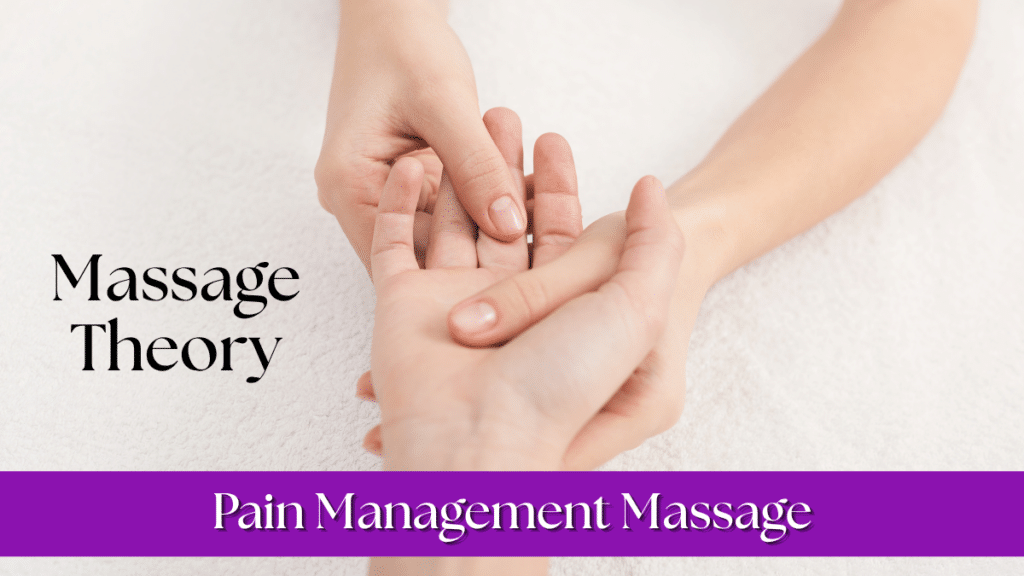
Complete Touch
When you are massaging, use complete touch. This is when you are fully present as you apply a technique. When you do this, you explore their soft tissues with palception and listen to their body through tactile dialogue.
Complete touch is more than having your entire hand on your client while you perform a technique. It is using purposeful touch to help them celebrate the delightfulness of life. It means focusing solely on them, hoping they experience the peace and ease they need, by providing the massage of their dreams.
When listening and exploring, use the elements of touch as a rubric to guide you and observe each second of the session. This helps ensure every aspect of the massage feels heavenly by helping you assess every element of a technique.
When you know where and how you are touching your client; the pressure you are using, how they may be experiencing it; and the path you are taking to move across their body, you can make subtle adjustments that wouldn’t be possible with a standard approach.
How can you know if you are fully present?
When performing a massage, ask yourself, am I actually in the room with this person, or am I somewhere else? If your mind is thinking about what you are going to do after work, you aren’t giving them complete touch.
Complete touch means giving someone your full attention; in that moment, they are the center of your universe and have your undivided attention.
What are some ways to get yourself into this state?
There are numerous ways to get yourself into this state; one is to have a mindful massage environment.
This means minimizing your external and internal distractions. It also includes how you replenish yourself when you’re not giving a massage. What are you doing to lift your spirit throughout your daily life? Your peace and ease influence whether you can offer a kind, caring, and compassionate touch.
When you are present in the moment and your healer’s heart is in harmony with your hands, you will embody your presence. Once you are in this state, you will be consciously attentive, thoroughly engrossed, and absorbed.
Pampering Touch
Massage as if you were moving your hand through water. Create a rhythm and flow, like a gentle wave. Invite them to lay, rest, and float on a sea of peace as they receive the massage of their dreams.
Pampering touch feels better than the standard clinical approach because it focuses on creating safe, pleasurable sensations. Clinical touch, on the other hand, views the body as a machine with buttons that need to be pushed to get it back into working order.
While clinical massage can be effective, it often falls short because it removes the person from the experience. The therapist sees a problem to be addressed, rather than the person who is hurting and in pain. In the context of massage, this means they see your muscles, fascia, and knots as the source, so they overfocus on them to alleviate your pain.
Pain Management Massage
In pain management massage, I combine pampering touch with clinical precision. However, instead of focusing on the muscles, I see the body as a conduit to the brain. At the end of the day, the brain decides whether to produce pain, so we have to work by its rules.
Earlier I mentioned how you aren’t massaging the fascia, releasing muscle knots, or interrupting pain signals via gate control theory. What you are really doing is creating a robust sensory experience to help the brain redraw its somatosensory maps.
The more pleasurable and safe information we can feed to the brain, the greater the chance it will create a new map that is less afraid. Since pain is how the brain expresses fear, this can help reduce the amount of pain and discomfort your client experiences.
Traditional spa-like add-ons and amenities add value in pain management because they provide rich sensory experiences that feel good. Many can even increase your client’s interoceptive awareness, so they need less pressure to feel ease. For example, a sugar scrub can increase tactile acuity by drawing attention to the subtle granules moving across their skin.
A hot stone massage doesn’t increase pressure; instead, the heat increases their nervous system’s sensitivity. As a result, it heightens their perception of the pressure you use during the session.
Redrawing Somatosensory Maps
When I perform a massage, I want to help my client redraw their somatosensory maps. I want to provide their brain with safe, rewarding stimuli so their neurotags use credible evidence to assess whether the body is safe or in danger.
To do this, I use an array of approaches from many different modalities. I don’t have to believe the modality’s “science” for it to positively affect my client.
I tell you this because you don’t have to reinvent the wheel with your techniques; nearly everything you already do will have a positive effect in your treatment room if it doesn’t cause your client pain.
For example, myofascial release is a slow and deliberate application of pressure that often feels wonderful. Is it influencing the fascia or having any of the claimed effects? Not in the way most practitioners of the modality think, but it still helps the brain retrain its perception of safety.
On my medical massage page, I discuss a whole bunch of ways I help my clients redraw their sensory maps. For example, here are some methods I use to decrease pain sensitivity:
- Cold Stone & Massage: Cold helps reduce sensitivity and localized inflammation. It can also help limit secondary sensitization and, in some instances, reduce the spread of sensitivity. Cold can help with many types of pain, but avoid it if the client has CRPS with cold sensitivity.
- Mindful Body Scans: Being encouraged to feel every nook and cranny of your body opens up your awareness and encourages a healthy mind-body connection.
- Sensory Discrimination Training: Ongoing pain can blur sensory maps, resulting in nonspecific pain. These techniques draw your attention to targeted areas to help improve sensory clarity and reduce discomfort.
- Skin Replenishing Oils & Creams: Dry skin can reduce tactile sensitivity, which lowers the quality of the signal your brain receives. Skin-replenishing oils and creams help moisturize dry skin, reducing the number of threat signals sent to the brain and improving the clarity of touch-related signals.
- Distal to Proximal Techniques: In instances of hypersensitivity, especially when allodynia is present, the massage should begin in an area of the body that does not hurt. This helps you feel safe and calm and reduces the risk of worsening pain or triggering an acute flare-up.
- Vibration Techniques: When an area is sensitive to touch, vibration techniques may be used to gently provide alternate sensory information to help reduce the sensitivity of an area so it may be touched without discomfort.
Redrawing these maps can help reverse cortical smudging. When a map is smudged, the brain cannot clearly identify, feel, or control a specific area.
What are some signs of cortical smudging?
- Loss of Topographical Specificity: Neural areas of the body that are close together may lose their boundaries, resulting in muted tactile awareness.
- Sensory Blurring: Due to the loss of somatic boundaries, two points of touch in a local area may be difficult or impossible to pinpoint their location.
- Spreading Pain: The blurriness can result in pain spilling out over the body in unrelated areas. This may contribute to nonspecific pain.
Influence of The Spa Mystique
Spa Environments Increase Client Comfort and Openness to Care
If you have decorated your treatment room to feel like a doctor’s or chiropractic office, it will feel stale, distant, and cold. If it is set up like a physical therapy space or gym, it will feel more engaging, but it still won’t be pleasantly immersive.
If you want to foster emotional comfort while still appearing professional, consider designing it like a mental health professional’s room. The last thing you want is to set up your treatment room to look like a bedroom. Many massage therapists make this mistake, and it sends the wrong message.
Think about the mystique of your massage; this influences the massage story that you want to tell. If you don’t set the stage, your client won’t be primed for the treatment they are about to receive.
When the environment has an essence of pampering, it encourages openness for exploration. For example, many techniques that help reduce or balance sensitivity, redraw somatosensory maps, and reduce central sensitization rely on the ambiance of a spa-like setting to set the stage.
Without a pampering environment, the techniques will feel weird because they don’t match the mystique of the clinical setting.
Autonomic Nervous System
In massage therapy school, there is a lot of talk about the parasympathetic and sympathetic nervous systems, and maybe you have asked yourself when it will come up in my massage theory writings. In my opinion, one of the most influential ways it shows up is in how your treatment room looks and feels.
Imagine a doctor’s office: the sterile bright light, hard chairs, clinical charts, weird anatomical posters, and the foreboding stress of infinite what-ifs. As soon as you walk into that space, your autonomic nervous system reads the room and asks: Do I need to be on guard, or can I relax?
The answer doesn’t come from a massage that hasn’t happened, but from the light, sound, smell, temperature, pace, and what the space suggests will happen next.
A treatment room set up like a spa does the opposite. Gentle light, warmth, pleasant music, soft linens, and comfy chairs provide safety cues to the nervous system, telling it is safe and that everything is okay.
While you are likely not trying to craft a space that looks and feels like a doctor’s office, even trying to emulate some of its clinical decor can negatively affect your client’s autonomic state.
One thing to ask yourself when trying to make your space clinical is: why? Why do you want to present yourself in this way? Then ask whether your approach and expertise match. If they don’t, it creates incongruence, and your clients will feel it.
The Impact of a Clinical Demeanor
The Way You Express Emotion Influences Your Client’s Experience
When people are in the presence of a healthcare or wellness professional, they are often vulnerable and distressed. They are looking for someone to be their access point to feel better. This makes them more sensitive to your emotional presence or absence.
When a client meets you for the first time, they watch for facial expressions and body language that convey warmth, empathy, and engagement. When you demonstrate a blank or neutral face, it mirrors the still-face paradigm that patients often encounter in medical settings. This may cause them to believe you are uninterested, not engaged, or that they are just an unimportant person you are obligated to massage.
A client’s perceived safety and trust in your touch is significantly influenced by your perceived interest, enthusiasm, and engagement with what the client has to say.
This is one reason I place so much emphasis on the intangible aspects of massage. These are the things that only you and God can see. They are your internal thoughts and feelings, and while others may not be privy to what is happening within you, they can witness the byproduct of your inner peace or disharmony.
Transference Countertransference
A still, overly neutral face can lead to transference because the emotional void is easily filled with an old relationship. What you believe is a professional demeanor may be misinterpreted by the client as disinterest. As a result, they may associate you with a doctor who was more interested in the computer than them, a partner who was emotionally absent, or a parent who was cold and often ignored them.
This reaction isn’t limited to your facial expression; it can also be the byproduct of how long you are willing to listen to them, and how you listen. If it looks like everything they say goes in one ear and out the other, it can greatly reduce their trust in you, or worse, make them feel abandoned.
If the client feels this way, their reaction to you can influence how you feel. You may become irritated with them as they seem unwilling to relax or communicate. If you react negatively to these emotions or let them manifest in the room, they will intensify the discomfort in a self-perpetuating cycle.
Are You Ready to Learn Together?
If you have been searching for a “massage school near me” or a “massage class near me,” you are in luck because we offer massage classes, massage mentorship, and massage therapy continuing education.
Schedule a massage class today!
Disclaimer
Information provided on this website, including educational materials, pain neuroscience explanations, treatment suggestions, and any other content shared during sessions, classes, or coaching, is for educational purposes only. It is not intended to diagnose, treat, cure, or prevent any disease or medical condition, and is not a substitute for professional medical advice, diagnosis, or treatment.
You should always consult a qualified healthcare provider regarding any medical concerns. Never disregard professional medical advice or delay seeking it because of information you receive here.
O'Fallon Massage
JB SPA
2717 Hwy K, O’Fallon, MO 63368